High-Density Apple Plantation in J&K: Subsidy, Cost and How to Start
High-density apple plantation uses about 166 dwarf trees per kanal. This guide explains the 50% subsidy under MIDH and the J&K scheme, HADP support, a cost example and how to apply.
By Arjun Raina, Chairman, HMAP
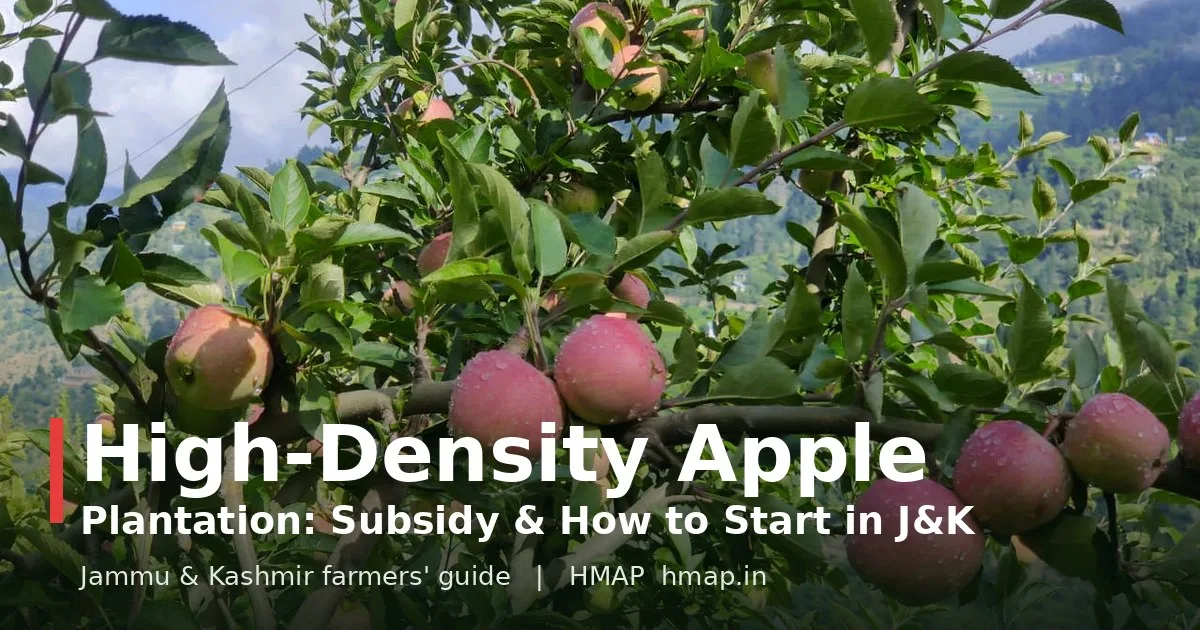
High-density apple plantation means growing many dwarf apple trees close together on a supporting rootstock. In Jammu & Kashmir, about 166 plants per kanal are commonly used. Growers can get a 50% subsidy under MIDH and the UT's Modified High Density Plantation Scheme, and HADP supports the supply of planting material.
Last updated: 15 November 2026. HMAP is an independent farmer producer organisation. It is not a government body.
What is high-density apple plantation?
In a traditional orchard, a few large trees grow on one kanal and take many years to bear fruit. In a high-density orchard, many small trees are planted in rows, usually with a support wire or stake. The trees are easier to prune, spray and harvest, and they start fruiting earlier.
Key facts at a glance
- Plants per kanal: about 166 in J&K
- Subsidy under MIDH: 50% of the approved project cost for Himalayan States and UTs, for up to two hectares per beneficiary (about 39 kanals)
- UT scheme: the Modified High Density Plantation Scheme also gives 50% assistance, based on the per-hectare budget set under the scheme
- Loans: institutional finance of up to 80% of project cost is possible under the UT scheme, subject to bank norms
- Planting material: HADP Project 21 supports designer plants, rootstock banks and nurseries for high-density plantations
What does the subsidy cover?
MIDH assistance covers planting material and other input costs for high-density plantation and for rejuvenation of old orchards. Add-on items such as fruit bagging, weed mats, anti-hail protection and fencing are also supported. The subsidy is calculated on the approved cost norms, not on what you actually spend.
A simple cost example
Suppose plants cost Rs 400 each. For one kanal with 166 plants, the plants alone cost 166 x 400 = Rs 66,400. The full project cost is higher, because it also includes the support system, irrigation, fencing and labour. Ask the Horticulture Office for the current approved cost norms before you plan your budget.
How to apply
- Check that your land is suitable for apple, and keep your land records ready.
- Register as a farmer on the Kisan Sathi portal (hadp.jk.gov.in).
- Contact the Chief Horticulture Officer of your district, or the Horticulture Development Officer of your block, and tell them you want to apply for high-density plantation.
- Ask for the current guidelines: minimum area, plant source, approved varieties and rootstocks.
- Buy plants only from a registered nursery or an approved source.
- If you need a loan, talk to your bank early and keep the approved project estimate ready.
- After planting, the department inspects the work, and the subsidy is released as per the rules.
Things to check before you plant
- Plant material must be produced under the supervision of the Horticulture Department and the Nursery Registration Officer.
- Ask about the minimum area. Older schemes required more than three kanals, but norms can change.
- Plan irrigation, support wires and fencing before the plants arrive.
- Choose varieties and rootstocks that suit your altitude.
Frequently asked questions
How many apple plants can I grow in one kanal?
About 166 plants per kanal in high-density plantation in J&K.
How much subsidy is available?
Under MIDH and the Modified High Density Plantation Scheme, assistance is 50% of the approved cost. Always confirm the current norms with your Horticulture Office.
Who can apply?
Farmers and orchard owners with suitable land. Details such as minimum area are decided by the department.
Can I grow another crop between the rows?
Many growers try to use the space between plants. Ask your horticulture officer first, because it can affect the scheme norms and the health of young trees.
Can a farmer producer organisation like HMAP help?
Yes. HMAP, an independent farmer producer organisation in Bhaderwah, can guide farmers on groups, training and markets. For subsidy, always apply through the Horticulture Department.